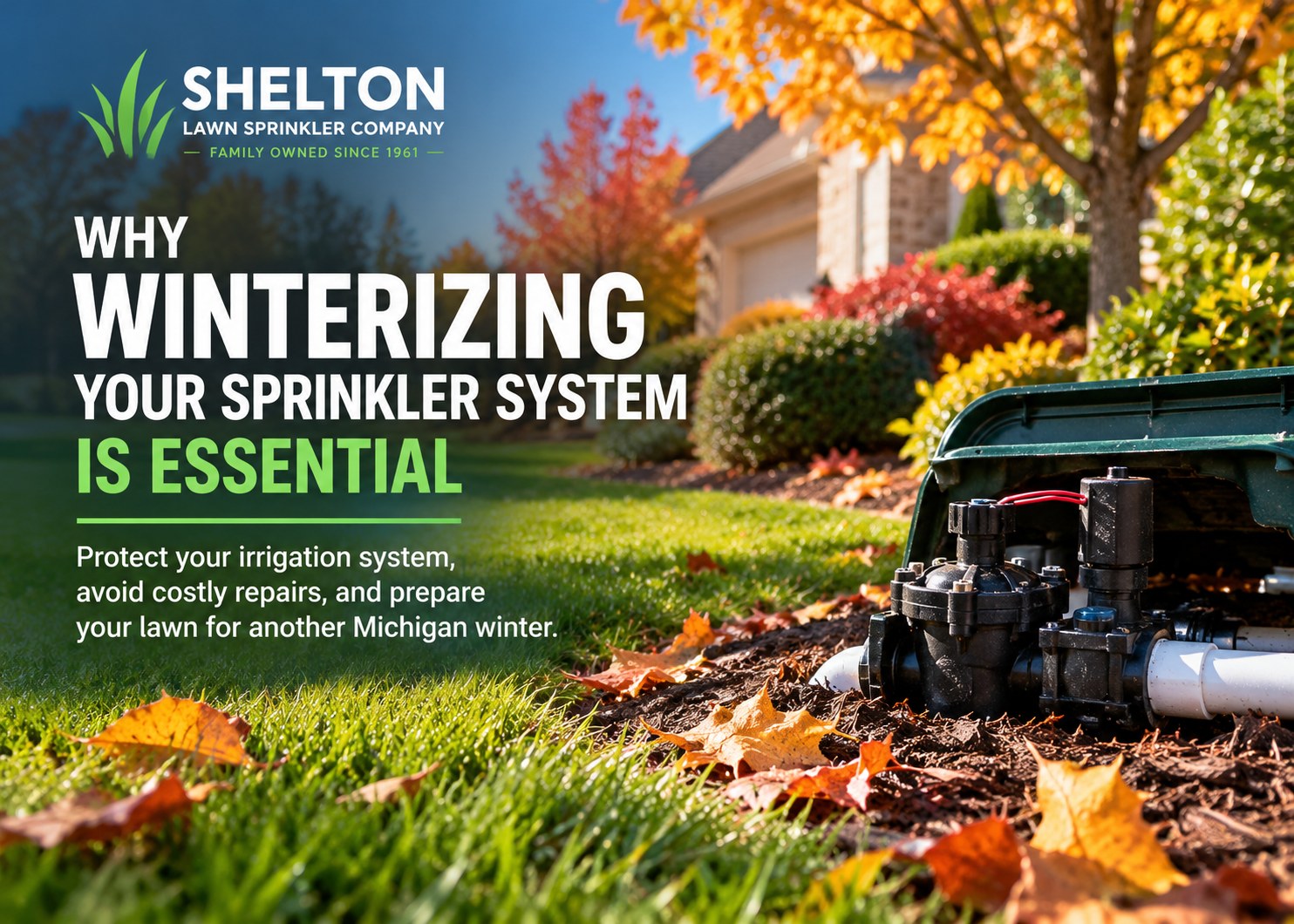
Protect your irrigation system, avoid costly repairs, and prepare your lawn for another Michigan winter.
Michigan winters can be tough on your lawn, landscaping, and especially your underground sprinkler system. When temperatures begin dropping in the fall, one of the most important steps homeowners can take is properly winterizing their irrigation system.
Unfortunately, many homeowners don’t think about their sprinkler systems until spring arrives and something isn’t working.
By then, the damage may already be done.
At Shelton Lawn Sprinkler Company, we’ve been helping homeowners care for their lawns and irrigation systems since 1961. As a family-owned business, we understand the importance of protecting your investment before winter weather arrives.
Here’s why sprinkler winterization matters, what can happen if you skip it, and when Michigan homeowners should schedule their seasonal sprinkler shutdown.
What Is Sprinkler System Winterization?
Sprinkler winterization is the process of preparing your irrigation system for freezing winter temperatures.
Throughout the watering season, water travels through underground pipes, sprinkler heads, valves, and other irrigation components.
When winter arrives, water left inside these components can freeze and expand, potentially causing cracks, leaks, and other damage.
Professional sprinkler winterization typically involves:
- Turning off the irrigation water supply.
- Properly draining or clearing water from irrigation lines.
- Using compressed air when appropriate to remove remaining water.
- Clearing individual sprinkler zones.
- Protecting exposed irrigation components.
- Inspecting the system for visible problems.
- Shutting down the irrigation controller for winter.
The goal is simple: Remove water that could freeze and damage your irrigation system.
1. Prevent Frozen and Broken Sprinkler Pipes
One of the biggest reasons to winterize your sprinkler system is to prevent underground pipe damage.
When water freezes, it expands. If water remains trapped inside irrigation pipes, that expansion can place tremendous pressure on the surrounding material.
Depending on the system, this can result in cracked PVC pipes, damaged fittings, broken connections, and leaks.
Some damage may not become apparent until spring, when the system is turned back on.
A small crack can turn into a significant underground leak once water pressure returns.
Proper winterization helps reduce the likelihood of these problems and protects the underground irrigation network you’ve invested in.
2. Protect Sprinkler Heads and Valves
Your underground irrigation pipes aren’t the only components vulnerable to freezing temperatures.
Sprinkler heads, electric valves, valve manifolds, and exposed backflow prevention assemblies can also suffer damage when water freezes inside them.
Common freeze-related problems include:
- Cracked sprinkler head housings.
- Broken valve bodies.
- Damaged seals and fittings.
- Leaking irrigation connections.
- Damaged backflow prevention equipment.
Replacing individual components may seem manageable, but repairing several damaged parts throughout an irrigation system can become expensive.
A proper fall shutdown helps protect these important components before Michigan’s coldest weather arrives.
3. Avoid Expensive Spring Sprinkler Repairs
Skipping sprinkler winterization might save money in the fall, but it can create much larger expenses in the spring.
Imagine turning on your sprinkler system in April only to discover that several zones have lost pressure, water is pooling in your yard, or a pipe has cracked underground.
Repairing these issues may require locating the damaged section, excavating the lawn, replacing pipes or fittings, and testing the system again.
In some cases, landscaping may also need to be restored after repairs.
Preventive winterization is generally far less disruptive than repairing extensive freeze damage.
Taking care of your system in the fall can help you avoid unexpected repair bills when you should be enjoying the start of the growing season.
4. Protect Your Lawn and Landscaping Investment
A properly functioning sprinkler system plays an important role in maintaining a healthy lawn and attractive landscaping.
When irrigation components are damaged during winter, spring watering can become inconsistent.
Some areas of your lawn may receive too little water, while others may become oversaturated because of leaks or broken sprinkler heads.
These problems can affect:
- Newly installed sod and established turf.
- Flower beds and ornamental plantings.
- Trees and shrubs.
- Landscape beds and decorative features.
- Soil conditions around patios and walkways.
Winterizing your sprinkler system is about more than protecting pipes. It’s also about protecting the landscaping that surrounds your home.
5. Extend the Life of Your Irrigation System
A professionally installed irrigation system is a long-term investment in your property.
Like other outdoor systems, it benefits from regular seasonal maintenance.
Proper winterization helps reduce unnecessary stress on irrigation components, limits exposure to freeze-related damage, and supports reliable operation year after year.
When combined with professional spring startup services, seasonal inspections, and timely repairs, winterization can help extend the useful life of your sprinkler system.
For Michigan homeowners, this is an important part of responsible irrigation maintenance.
When Should You Winterize Your Sprinkler System in Michigan?
For homeowners throughout Metro Detroit and Southeast Michigan, September through October is generally the ideal period to schedule sprinkler winterization.
The exact timing depends on weather conditions, but the goal is to complete the shutdown before a hard freeze threatens the system.
Michigan weather can be unpredictable.
Warm afternoons in early October can quickly give way to freezing overnight temperatures.
Waiting until the first snowfall is not a good strategy.
We recommend scheduling winterization early enough to avoid the late-fall rush and give your system the protection it needs.
Can You Winterize Too Early?
Some homeowners worry that shutting down their irrigation system in September or early October will hurt their lawns.
However, as temperatures cool and grass growth slows, lawns generally require less supplemental watering.
Natural rainfall may provide sufficient moisture during much of the fall.
If conditions remain unusually warm and dry, watering needs should be evaluated before shutting down the system.
The important thing is balancing your lawn’s seasonal watering needs with the risk of freezing temperatures.
Can You Winterize Your Sprinkler System Yourself?
Some irrigation systems are designed for manual draining, while others require specialized procedures and compressed air.
Although homeowners may be able to shut off their water supply and adjust their irrigation controller, properly clearing the entire system can be more complicated.
Using compressed air incorrectly can damage irrigation components or create a serious safety hazard.
Excessive air pressure, improper equipment, and incorrect zone procedures can damage pipes, valves, and sprinkler heads.
Professional irrigation technicians understand how to follow system-specific procedures and identify components that require additional protection.
For many homeowners, hiring an experienced irrigation company provides peace of mind and reduces the risk of accidental damage.
What Happens During a Professional Sprinkler Winterization?
Although the exact process varies depending on your irrigation system, a professional winterization appointment generally includes several important steps.
Step 1: Shut Off the Irrigation Water Supply
The irrigation water supply is turned off using the appropriate shutoff valve.
Step 2: Prepare the System for Draining
The technician identifies the system’s drain points, valves, and backflow prevention equipment.
Step 3: Remove Water From the Irrigation Lines
Water is drained or cleared from the system using a method appropriate for its design. Where compressed air is required, suitable equipment and pressure limits are used.
Step 4: Clear Individual Sprinkler Zones
Each irrigation zone is addressed to help remove trapped water from pipes and sprinkler heads.
Step 5: Prepare the Controller for Winter
The irrigation controller is placed into its appropriate winter setting while preserving programming when possible.
Step 6: Check for Visible Concerns
Any noticeable problems can be identified for future maintenance or spring repairs.
The result is an irrigation system better prepared for freezing winter conditions.
Don’t Forget About Spring Sprinkler Startup
Winterization is only half of proper seasonal irrigation maintenance.
When spring arrives, your sprinkler system should be carefully brought back into operation.
A professional spring startup can include:
- Restoring the irrigation water supply.
- Inspecting valves and exposed connections.
- Checking sprinkler heads for damage.
- Testing each irrigation zone.
- Adjusting spray patterns and coverage.
- Checking for leaks or pressure problems.
- Programming the irrigation controller for spring conditions.
Together, fall winterization and spring startup services help keep your sprinkler system operating efficiently throughout the year.
Learn more about our irrigation services.
Why Choose Shelton Lawn Sprinkler Company?
Since 1961, Shelton Lawn Sprinkler Company has been helping homeowners care for their outdoor spaces.
As a family-owned business, we believe in dependable service, quality workmanship, and long-term customer relationships.
Our services include irrigation system installation and repair, seasonal sprinkler maintenance, landscaping, outdoor living improvements, landscape lighting, and more.
We serve homeowners throughout Metro Detroit, including communities in Wayne, Oakland, Macomb, and Livingston counties.
Whether you need sprinkler winterization, spring startup service, or repairs to an existing irrigation system, our team can help you prepare for the changing Michigan seasons.
Frequently Asked Questions About Sprinkler Winterization
What month should I winterize my sprinklers in Michigan?
September and October are generally good months to schedule sprinkler winterization in Southeast Michigan. The system should be protected before freezing temperatures can damage vulnerable components.
What happens if I don’t winterize my sprinkler system?
Water trapped inside irrigation pipes, valves, and sprinkler heads can freeze and expand. This may cause cracked pipes, broken fittings, leaks, and expensive spring repairs.
Does every sprinkler system need to be blown out?
Not necessarily. Some systems are designed for manual or automatic draining, while others require compressed air. The appropriate winterization method depends on the system’s design and manufacturer requirements.
Can one freezing night damage my sprinkler system?
Yes. Depending on the temperature, duration of the freeze, and exposure of system components, even an early-season freeze can damage vulnerable irrigation equipment. Exposed components are particularly susceptible.
Should I turn off my sprinkler controller during winter?
Most irrigation controllers should be placed in an appropriate off, rain, or winter mode. Some controllers should remain powered to preserve settings or support other functions. Follow the manufacturer’s recommendations.
Is sprinkler winterization worth the cost?
For most Michigan homeowners with irrigation systems, winterization is a worthwhile preventive maintenance service. It helps reduce the risk of freeze-related damage and unexpected repair expenses.
Schedule Your Sprinkler Winterization Before the First Freeze
Michigan winter weather doesn’t wait for homeowners to finish their fall maintenance.
Protecting your irrigation system now can help prevent costly damage, preserve your landscaping investment, and make spring startup easier.
At Shelton Lawn Sprinkler Company, we’ve been helping homeowners care for their lawns and outdoor spaces since 1961.
Don’t wait until freezing temperatures arrive.
Schedule your sprinkler winterization service today.
Call Shelton Lawn Sprinkler Company: 313-702-8014
Serving Metro Detroit and surrounding Southeast Michigan communities.
Family-Owned Since 1961 — Irrigation, Landscaping & Outdoor Living.