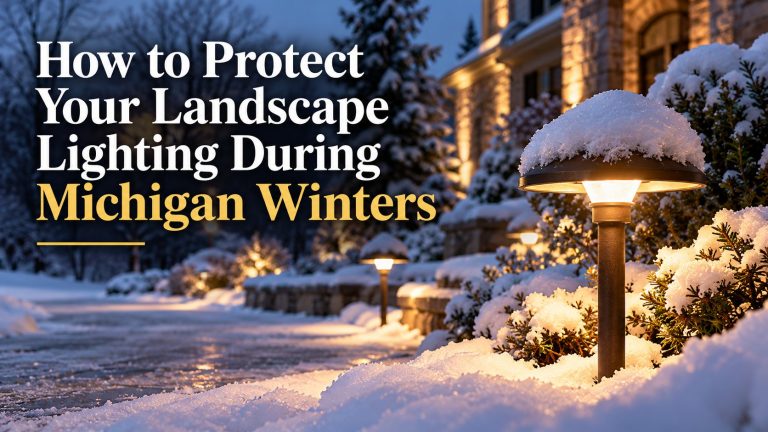
Keep your outdoor lighting beautiful, safe, and working through Michigan’s coldest months.
Michigan winters bring freezing temperatures, heavy snow, ice, and unpredictable weather. While homeowners often prepare their lawns, sprinkler systems, and landscaping for winter, one important feature is frequently overlooked: outdoor landscape lighting.
Landscape lighting adds beauty, security, and functionality to your property throughout the year. From illuminating walkways and highlighting trees to showcasing patios and architectural features, a properly designed lighting system can transform your outdoor spaces.
But winter weather can take a toll on fixtures, wiring connections, transformers, and other components.
At Shelton Lawn Sprinkler Company, we’ve helped homeowners improve their outdoor spaces since 1961. As a family-owned company serving Metro Detroit and Southeast Michigan, we understand how important it is to protect your outdoor investments.
Here’s how to prepare your landscape lighting for winter and keep it operating reliably when you need it most.
1. Inspect Your Landscape Lighting Before Winter Arrives
Fall is an excellent time to inspect your outdoor lighting system.
Before freezing temperatures settle in, walk around your property after dark and check that every fixture is operating correctly.
Look for:
- Lights that flicker or fail to turn on.
- Damaged or cracked fixture housings.
- Loose or tilted pathway lights.
- Exposed or damaged wiring.
- Corrosion around connections.
- Moisture collecting inside fixtures.
- Uneven illumination caused by shifted fixtures or overgrown landscaping.
Addressing minor problems before winter can help prevent larger issues when snow and frozen ground make repairs more difficult.
Shelton Tip: Take a few photographs of your lighting system before the first snowfall. They’ll help you locate fixtures and identify any changes after winter.
2. Protect Outdoor Lighting Fixtures From Snow and Ice
Landscape lighting fixtures are designed for outdoor conditions, but not every fixture is equally suited for Michigan winters.
Snow accumulation, ice buildup, and repeated freeze-thaw cycles can place additional stress on outdoor lighting equipment.
Pathway lights and low-mounted fixtures are especially vulnerable because they sit close to the ground.
To help protect them:
- Make sure fixtures are securely installed.
- Check for cracked lenses and damaged seals.
- Keep drainage openings clear where the fixture design requires them.
- Avoid piling shoveled snow directly onto lights.
- Mark fixture locations before heavy snowfall.
- Never chip ice off a fixture with metal tools.
If you use a snowblower or hire a snow removal company, make sure landscape lighting locations are clearly identified.
Accidental damage from shovels, plows, and snowblowers can be just as troublesome as damage caused by winter weather.
3. Check Wiring and Electrical Connections
Moisture is one of the biggest concerns for outdoor lighting systems.
Melting snow and winter rain can enter poorly sealed connections, potentially causing corrosion, flickering lights, or electrical failures.
Professional landscape lighting installations typically use outdoor-rated wiring, appropriate connectors, and equipment designed for the installation environment.
Before winter, inspect accessible components for visible signs of damage.
Watch for:
- Exposed or frayed wiring.
- Loose connections.
- Cracked cable insulation.
- Damaged junction boxes.
- Signs of water intrusion.
- Repeatedly tripping breakers or GFCI outlets.
Never handle exposed electrical wiring while the system is energized.
If you discover damaged wiring or suspect an electrical problem, turn off the affected system when safe to do so and contact a qualified professional.
For line-voltage lighting, repairs should be handled by a qualified electrician.
Properly protected electrical connections help your landscape lighting withstand Michigan’s changing winter conditions.
4. Protect Your Landscape Lighting Transformer
Many residential low-voltage landscape lighting systems rely on a transformer to convert household electricity to the lower voltage used by the fixtures.
The transformer is an important part of your lighting system, and its condition can affect every connected light.
Before winter arrives:
- Check that the transformer enclosure is securely mounted.
- Inspect for visible corrosion or damage.
- Make sure the enclosure closes properly.
- Keep snow and debris from blocking required ventilation or drainage.
- Confirm that cables and connections are properly protected.
- Check the manufacturer’s winter operating recommendations.
Outdoor-rated transformers are generally designed to remain in service during winter when installed correctly.
Avoid wrapping a transformer in plastic or covering it with materials that could trap moisture or restrict airflow.
If the transformer appears damaged or is repeatedly losing power, have it inspected before winter weather makes access more difficult.
5. Adjust Your Lighting Schedule for Shorter Winter Days
One of the biggest advantages of landscape lighting becomes especially noticeable during Michigan winters.
As daylight hours decrease, homeowners rely more heavily on outdoor lighting for visibility and convenience.
Walkways, driveways, steps, and entrances can become difficult to navigate after sunset.
Consider adjusting your lighting schedule to accommodate earlier darkness.
Options include:
- Photocell controls: Automatically turn lights on when daylight fades.
- Programmable timers: Operate lighting during selected evening hours.
- Smart lighting controls: Allow compatible systems to adjust schedules remotely.
- Astronomical timers: Automatically adjust operating times based on local sunrise and sunset.
A properly configured lighting schedule can improve visibility while avoiding unnecessary energy consumption.
For many homeowners, LED landscape lighting paired with automatic controls provides a convenient, energy-efficient solution.
6. Keep Landscape Lights Clear of Snow and Debris
Snow can dramatically change how outdoor lighting performs.
A fixture that beautifully illuminates your landscaping in summer may become partially buried after a heavy winter storm.
When snow covers a light, it can block illumination and make the fixture difficult to locate.
However, clearing snow requires care.
Use a soft brush when appropriate, and avoid striking fixtures with shovels or other hard tools.
Never pour boiling water onto frozen lighting equipment. Sudden temperature changes can damage some materials.
If a fixture is completely buried or frozen in place, avoid forcing it free.
For lighting systems installed near driveways, walkways, and snow storage areas, consider whether the fixture placement should be adjusted during a future landscape lighting upgrade.
7. Consider Upgrading to LED Landscape Lighting
If your outdoor lighting system uses older halogen or incandescent lamps, fall may be a good time to consider upgrading.
Modern LED landscape lighting offers several advantages.
Lower energy consumption
LED fixtures generally use significantly less electricity than comparable traditional lighting.
Longer lamp life
Quality LED lighting can reduce the frequency of lamp replacements.
Flexible design options
LED fixtures are available in a variety of brightness levels, beam angles, and color temperatures.
Improved lighting controls
Many LED systems work with timers, photocells, and compatible smart controls.
Outdoor durability
Well-designed outdoor-rated LED fixtures can provide dependable performance in cold weather.
However, not every LED product is appropriate for every outdoor installation.
Choose fixtures rated for the expected weather conditions and have existing transformers and electrical compatibility evaluated before upgrading.
8. Don’t Forget About Pathway and Entryway Lighting
Winter is one of the most important seasons for functional outdoor lighting.
Snow-covered sidewalks, icy steps, and dark driveways create additional visibility challenges.
Strategically placed landscape lighting can help homeowners and visitors identify changes in elevation, walkway edges, and entrances.
Consider lighting around:
- Front walkways and steps.
- Driveway entrances.
- Sidewalk intersections.
- Outdoor stairways.
- Garage approaches.
- Patio access points.
- Main entry doors.
Landscape lighting does not eliminate slippery conditions, but improved visibility can help people identify potential hazards.
A well-designed system balances safety, appearance, and energy efficiency.
9. Schedule a Professional Landscape Lighting Inspection
Outdoor lighting systems contain multiple components that must work together.
Fixtures, cables, connectors, transformers, timers, and controls all contribute to reliable performance.
A professional inspection can help identify problems before they become more expensive or inconvenient.
Depending on the system, an inspection may include:
- Testing lighting fixtures.
- Checking low-voltage connections.
- Inspecting transformers and controls.
- Adjusting fixture placement.
- Evaluating lighting coverage.
- Identifying damaged components.
- Recommending LED upgrades where appropriate.
For homeowners with extensive landscape lighting installations, preventive maintenance can help protect the system’s performance and appearance.
Should You Turn Off Your Landscape Lighting During Winter?
In most cases, properly installed outdoor-rated landscape lighting can remain in operation throughout winter.
There is generally no need to shut down a functioning system simply because temperatures drop.
In fact, outdoor lighting can be particularly useful during Michigan’s shorter winter days.
However, a system with damaged fixtures, exposed wiring, water intrusion, or other electrical problems should be evaluated before continued use.
Always follow the equipment manufacturer’s operating instructions.
Why Winter Landscape Lighting Is Worth Maintaining
Landscape lighting isn’t just a summer feature.
During winter, it can make your property more inviting while improving nighttime visibility.
A thoughtfully illuminated home can highlight snow-covered trees, architectural details, stonework, and winter landscaping.
It can also make outdoor spaces more functional during the months when darkness arrives early.
Maintaining your landscape lighting helps protect both the practical and aesthetic value of your investment.
Why Choose Shelton Lawn Sprinkler Company?
Since 1961, Shelton Lawn Sprinkler Company has helped homeowners create and maintain beautiful outdoor spaces.
Our family-owned company provides services that include:
- Irrigation and sprinkler systems.
- Landscape design and installation.
- Outdoor living improvements.
- Landscape lighting.
- Ponds and water features.
- Drainage solutions.
- Seasonal outdoor maintenance.
We proudly serve homeowners throughout Metro Detroit, including Wayne, Oakland, Macomb, and Livingston counties.
Whether you’re considering a new landscape lighting installation, updating an existing system, or planning outdoor improvements for spring, we’re here to help.
Frequently Asked Questions About Landscape Lighting in Winter
Can landscape lighting stay on during Michigan winters?
Yes. Properly installed outdoor-rated landscape lighting can generally operate throughout winter. Fixtures, transformers, wiring, and connections must be suitable for the installation conditions.
Can snow damage landscape lighting?
Yes. Heavy snow, ice, freeze-thaw cycles, and accidental contact with snow removal equipment can damage outdoor lighting fixtures and components.
Do LED landscape lights work in freezing temperatures?
Many outdoor-rated LED fixtures perform well in cold weather. Always check the manufacturer’s specified operating temperature range and installation requirements.
Should I cover my landscape lights during winter?
Generally, fixtures designed for year-round outdoor use do not need additional coverings. Improper coverings can trap moisture or interfere with heat dissipation. Follow manufacturer instructions.
How often should landscape lighting be inspected?
An annual inspection is a useful maintenance practice, especially before winter. Systems exposed to harsh conditions or frequent landscaping activity may benefit from additional checks.
Is fall a good time to install landscape lighting?
Yes. Fall can be a good time to install or upgrade outdoor lighting before the ground freezes. Scheduling early helps avoid weather-related installation delays.
Keep Your Landscape Lighting Shining All Winter
Michigan winters can be demanding, but your outdoor lighting doesn’t have to suffer.
With proper inspections, weather-resistant equipment, protected connections, and seasonal maintenance, your landscape lighting can continue enhancing your property throughout the colder months.
Whether you’re protecting an existing lighting system or planning a new installation, Shelton Lawn Sprinkler Company can help you create an outdoor space that looks beautiful year-round.
Contact Shelton Lawn Sprinkler Company to discuss your landscape lighting needs.
Call 313-702-8014
Shelton Lawn Sprinkler Company — Family-Owned Since 1961
Serving Metro Detroit and Southeast Michigan.